
Government officials have defended efforts to preserve Uganda’s cultural heritage, insisting that legal protections are in place, even as experts warn that weak enforcement continues to expose historical sites to destruction.
Responding to questions regarding the threat posed by urbanisation to Uganda’s heritage ahead of the 2026 International Museum Day, State Minister for Tourism Martin Mugarra said the government has established a strong legal framework to safeguard cultural resources.
“Our role as government is to protect these resources for you,” Mugarra said, citing the Museums and Monuments Act, which provides for the protection of historical buildings and sites.
He noted that government is working closely with the Kampala Capital City Authority and other local authorities to ensure preservation, adding that any renovations on historical structures are done under strict guidelines to maintain their heritage value.
“All significant historical structures are known and protected under the law. If a building is demolished, it is because it is not recognised as having historical significance,” he said.
Mugarra also emphasized that cultural preservation is a shared responsibility, calling on communities, families, and institutions to play a role in safeguarding Uganda’s heritage.
Supporting government efforts, Jackline Nyirachiza, Acting Commissioner for Museums and Monuments, highlighted ongoing investments in the sector, including the establishment of a new museum in Karamoja to boost tourism and research.
She said the planned Karamoja Museum will house repatriated artefacts, including the John Wilson collection, as well as fossils, archaeological materials, and minerals from the region.
Nyirachiza added that government is finalising new regulations under the Museums and Monuments Act, covering licensing of private museums and protection of historical buildings, while also promoting partnerships with institutions such as the Cross-Cultural Foundation of Uganda.
Stakeholders Disagree
However, heritage experts have challenged the government’s position, arguing that the issue is not the absence of laws, but rather the failure to implement them.
Frederick Nsibambi, the Deputy Executive Director of the Cross-Cultural Foundation of Uganda, an NGO that promotes the appreciation of culture as vital for human development that responds to diverse identities in the country said rapid urbanisation continues to threaten both built and natural heritage.
“We have enough legislation, we have enough laws, we have enough policies. What is lacking is implementation—the willingness to apply these laws,” Nsibambi said.
He pointed to delays in passing a Kampala-specific ordinance to protect historical buildings, despite ongoing engagements with the Kampala Capital City Authority.
“Most of the historical buildings are found in Kampala and we needed to have a specific law for Kampala… but that law is taking forever to be passed,” he said.
Nsibambi also disputed claims that protected structures are secure, arguing that many buildings remain vulnerable because they have not been formally listed as national monuments.
“The only buildings that are safe are the ones that have been listed as national monuments… any building that has not been listed is not yet safe,” he said.
He stressed that listing requires collaboration between property owners, communities, and government agencies, warning that failure to document heritage sites undermines protection efforts.
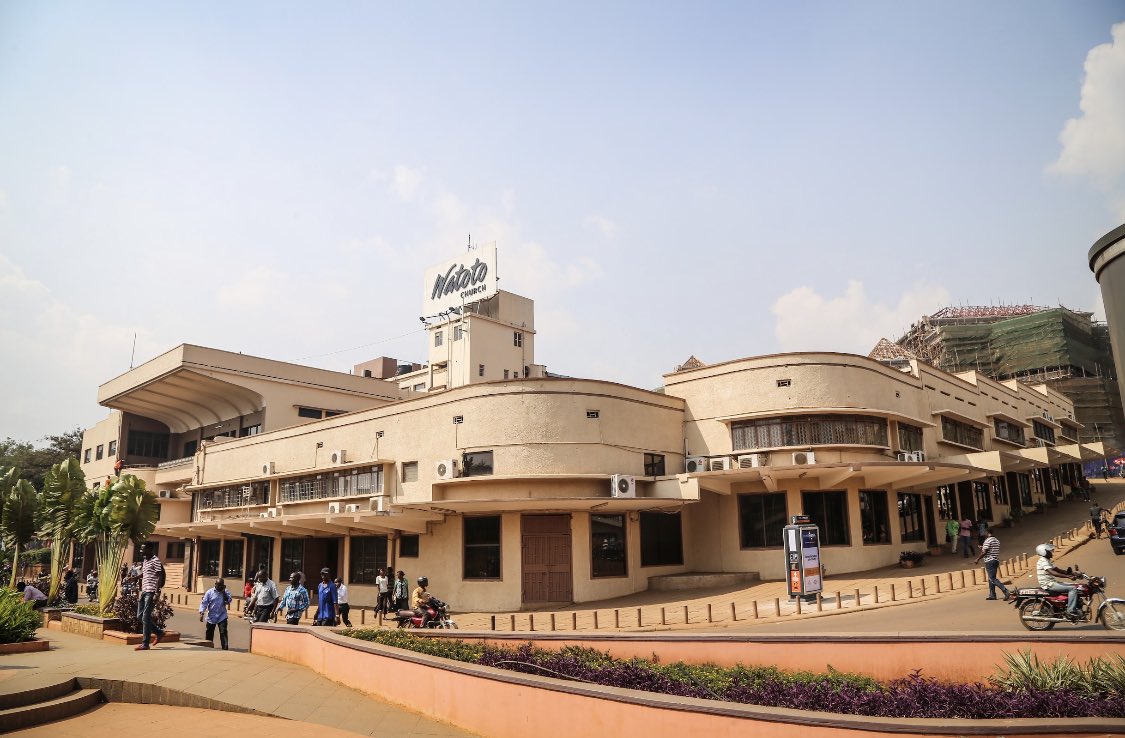
Highlighting the role of research, Nsibambi said documentation has already helped prevent the demolition of sites such as the Watoto Church building, which is now on the national register.
He further attributed ongoing demolitions to low public awareness and economic pressures, where developers prioritise commercial gains over preservation.
“Someone may look at a historical building and decide to demolish it and put up a shopping mall which will bring in more money,” he said.
Drawing comparisons with Europe, Nsibambi noted that historical buildings are a key driver of tourism and could similarly benefit Uganda if properly preserved.
He warned that continued destruction of heritage sites risks erasing the country’s history, including locations tied to major events such as the 1900 Agreement.
“If you demolish all the historical buildings in Kampala today, you will have a city that looks like it started existing in 1986,” he said.
Nsibambi urged stronger action to preserve historically significant sites.
